

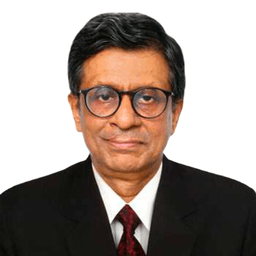
In this interview with The Policy Edge, Mr. Sumanta Chaudhuri reflects on how India's trade strategy has evolved in response to changing global economic opportunities. Drawing on his experience in services negotiations and free trade agreements, he discusses professional mobility, digitally delivered services, the design and implementation of trade agreements, and the challenges of translating international market access into greater participation by Indian businesses.
During your tenure, India placed considerable emphasis on the movement of professionals under the WTO's services agreement, while migration remained a concern for many countries. How did the discussion move towards a workable negotiating framework?
When I took over responsibility for services trade in 1998, India's principal interest appeared to be Mode 4 under the General Agreement on Trade in Services (GATS), which concerns the temporary movement of natural persons to another country to supply a service. Many developed countries were reluctant to discuss it, confusing temporary movement with Immigration and fearing that temporary movement could become a route to permanent settlement.
At that time, meetings on Mode 4 at the WTO were attended by only four participants: India, Pakistan, Egypt and the WTO Secretariat. We needed to change our approach substantially to move negotiations forward.
I began engaging directly with representatives of the United States, including industry groups from financial services, telecommunications and other sectors that regularly visited Geneva as well as members of Congress who came. Our argument was that businesses needed skilled professionals, and an orderly framework for their temporary movement could help meet those needs. A couple of us also developed a seminal paper on Mode 4, clearly distinguishing temporary movement from immigration and introducing categories of natural persons to help implement such commitments. It is a matter of deep satisfaction that these concepts and categories have since become the basis for Mode 4 commitments at the WTO and in bilateral and regional agreements.
Temporary movement became a more established part of services trade negotiations, including through categories such as contractual service suppliers and independent professionals. This mattered to India because services exports in some sectors depended on professionals being able to travel temporarily to the markets they serve.
We also anticipated and recognised at an early date India's growing capabilities in IT and related services through cross-border mode of delivery. Digital delivery offered opportunities to expand exports under Mode 1, even where restrictions on movement remained. We began developing the policy framework to support this form of cross-border service delivery and India also led a coalition of both developed and developing countries.
India's services exports subsequently grew substantially, with digitally delivered services as an important driver. As the global trading system faces new pressures, what does this experience tell us about India's ability to adapt its trade strategy?
When we began working on services trade in the late 1990s, India's software industry was already emerging, but the scale of the opportunity was not yet fully understood. We did not have comprehensive data on services exports. The Reserve Bank of India began collecting such data somewhat later.
India's share of global services trade was insignificant at the time. It has since risen considerably, reaching approximately 4.5 percent now, with its share of digitally delivered services reaching 6%. This reflects the growth of Indian capabilities and the importance of anticipating how technology can change the way services are delivered. We developed expertise, engaged with other countries and helped shape the negotiating framework around opportunities emerging from technological change.
The broader trading system now faces different challenges. The Doha Round did not conclude for a variety of reasons, and the WTO is at a crossroads. Foundational principles such as most-favoured-nation treatment and national treatment are facing systemic threats. Trade policy also increasingly intersects with geopolitics, national security, supply-chain resilience, sustainability and digital trade.
India will need to adapt while protecting its interests and engaging constructively with trading partners. The experience of services trade shows the value of technical expertise, understanding emerging economic trends and adapting policy as opportunities arise.
India's approach to free trade agreements (FTAs) has evolved considerably since its early agreements with regional partners. How did the thinking behind these agreements change over time?
I would broadly divide India's experience with free trade agreements into two phases. The first involved greater engagement with regional trading partners, particularly in Asia. The second emerged after a period of relative pause, with renewed focus on Europe and the Middle East, among others.
At the time of the Uruguay Round, India had few preferential trade agreements. The initial arrangements were relatively limited, including those with Sri Lanka and Thailand. As our experience developed, we began negotiating more comprehensive agreements. The India-Singapore Comprehensive Economic Cooperation Agreement, signed in 2005, was an important milestone, covering goods, services, investment, dispute settlement and other trade-related matters.
These agreements were also part of India's broader engagement with East and Southeast Asia under the Act East policy. The region was becoming an important centre of global economic growth, and India could not afford to remain outside its expanding production networks. Historical links, geographical proximity and the Indian diaspora provided further reasons for engagement.
But India faced structural challenges. Our tariffs were generally higher than those of several East Asian economies, which had already liberalised trade among themselves. Reducing tariffs therefore required greater sacrifices on India's part. These countries also had strong manufacturing bases and competed with Indian producers in third-country markets, including textiles in Europe and the United States, and chemicals. Some of these countries already ran trade surpluses with India on merchandise trade. The challenge was to integrate India into regional value chains while managing the impact on domestic industry.
These considerations influenced the design of earlier agreements, including rules of origin. Some Indian exporters struggled to meet the preferential rules of origin, which were based on two criteria, and continued trading under most-favoured-nation tariffs, while exporters from partner countries were better placed to benefit from the preferential access India offered.
The subsequent rise in trade deficits with some partners needs to be seen in this context. Much of what India imported consisted of raw materials, intermediate goods and capital goods. The difficulty was that Indian industry did not always convert these inputs into higher-value products for export to third markets.
After several years of relative pause, India entered a second phase from 2022 onwards, following the COVID-19 disruption and renewed attention to supply-chain resilience. Agreements with the United Arab Emirates and Australia were followed by the European Free Trade Association, the United Kingdom, the European Union(EU) and subsequently New Zealand and Oman. This broadened India's network beyond its existing agreements in Asia and the Pacific.
The newer agreements cover a wider range of issues, including services, investment market access and facilitation, digital trade and sustainability. India has remained cautious where international commitments could constrain domestic policy choices, while engaging with partners on an equal footing.
Trade agreements may provide preferential market access, yet businesses may struggle to use it, while imports can rise without corresponding gains in domestic value addition and exports. How should India ensure wider economic benefits, and how should the outcomes be assessed?
Trade deficits alone do not provide a complete assessment of an agreement. We need to examine what is being imported, how those imports are used, whether domestic firms are becoming more competitive and whether export capacity is growing. Equally, we must understand why exporters may not be using available preferences and whether rules or procedures create practical difficulties.
India's circumstances have changed over the past two decades. Several industries have become more competitive, logistics have improved, and Indian firms have gained experience in international markets and regional value chains. The newer agreements have been negotiated against this changing backdrop.
The priority now is to ensure that businesses understand these agreements and can use them. Industry associations, export promotion councils and government institutions all have a role in explaining preferences, helping firms navigate requirements and identifying practical barriers. For this, we have developed several toolkits for industry at CII and undertaken a massive capacity building mission across the country.
We also need to assess the growth and composition of trade, preference utilisation, investment generated and the development of domestic capabilities. Such assessments must distinguish the effects of an agreement from other influences, including demand, technology, supply-chain changes and global economic conditions.
Drawing on your experience in government and more recently with the Confederation of Indian Industry (CII), what would help translate India's expanding trade relationships into greater business participation across states and smaller cities?
In the early years of the World Trade Organization and our free trade agreement negotiations, we often struggled to get businesses to engage. Many were unaware of the implications or paid little attention until an agreement or policy change directly affected them. Some felt that if their business was primarily domestic, international developments were of little concern.
That has changed considerably. Many businesses now actively explore overseas markets, and international operations account for a significant part of their activities. India's large and growing domestic market also provides substantial opportunities.
However, businesses still face difficulties navigating changing markets and policy requirements. Many need a better understanding of trade agreements, the choices available and the practical steps required to use preferential market access. Sustained engagement among government, industry and research organisations remains important.
I remember that during the Regional Comprehensive Economic Partnership (RCEP) negotiations, we travelled across the country to consult industry associations and export promotion councils. We explained the negotiations, listened to business concerns and helped them assess the implications.
Today, industry associations and export promotion councils increasingly address these issues through their own work. Outreach to tier-two and tier-three cities is growing, although much more needs to be done to build local capacity. Reaching smaller towns could also help enterprises with export potential access information and networks available to larger firms.
Initiatives such as the Districts as Export Hubs programme are relevant here because they bring districts and district administrations into the export ecosystem, helping connect local production capabilities with external markets.