

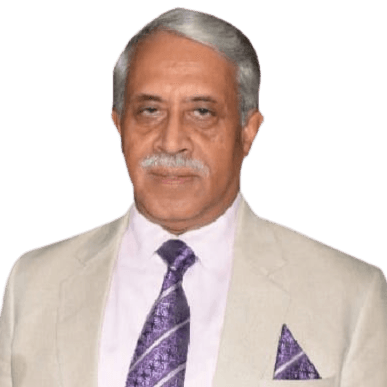
In this interview with The Policy Edge, Mr. Desh Deepak Verma reflects on how institutions evolve as governance moves from administration to policy design. Drawing on his experience in regulation, Parliament, and public sector reform, he discusses incentives, institutional autonomy, democratic deliberation, and stakeholder engagement in improving policy outcomes.
Several reforms you led sought to change incentives rather than intensify enforcement. What do those experiences reveal about designing systems that encourage compliance and performance rather than relying primarily on administrative control?
Many administrators instinctively think in terms of inspections, controls, penalties or disciplinary action. Sometimes those measures are necessary, but they do not always address the root cause of a problem. Sustainable improvements usually come from changing the incentives within a system.
During my tenure as Managing Director of the Uttar Pradesh State Road Transport Corporation, it was facing serious operational and financial challenges. One of the problems was a shortage of trained drivers and conductors. At the same time, there was the issue of compassionate appointments. Under the existing system, when an employee died in service, a dependent family member could be appointed to the organisation. In practice, families often nominated dependents whose skills did not match organisational requirements.
It came to my mind that these two problems could be a solution to each other and a productive arrangement could be made. So, we introduced a system under which eligible dependents wanting an appointment would first undergo training for driving and conductorship. Those who acquired the required skills could then be employed as drivers or conductors. This way, the organisation developed a trained workforce while fulfilling its social obligation of employing a son or daughter of an employee who dies in harness. As a result of this and several other measures, the corporation moved from the status of chronic losses to earning cash profits and subsequently net profits.
I encountered a similar challenge while working in the trade tax department. At the time, all trucks spent long hours at check-posts for inspections and tax verification. However, in doing so, this system imposed significant costs on transporters, slowed the movement of goods, and created opportunities for rent-seeking.
My view was different. Instead of checking every truck, we abolished the check-posts, strengthened mobile enforcement teams, and introduced substantial penalties for violations. This was essentially management by exception: transporters could move freely, while checks were conducted randomly.
Many feared that revenue would decline. I argued that faster movement of goods would increase economic activity and ultimately compensate for any perceived losses. That is exactly what happened. Revenues did not fall, and the system became more efficient.
Ultimately, effective institutional design begins with understanding the real constraints. Compliance and performance often follow naturally.
Many of these reforms also raise a broader question about the institutions that govern increasingly complex sectors. While economic liberalisation expanded the role of markets, it also increased the need for independent regulation. In your experience, how should regulators balance public interest, market efficiency and governmental priorities without undermining institutional autonomy?
In many ways, regulators occupy a unique space between the executive and the judiciary. They have a quasi-judicial role and are expected to bring specialised knowledge to issues that often involve technical, financial and public-interest considerations.
In my role as the Chairman of the Uttar Pradesh Electricity Regulatory Commission, this meant ensuring that enterprises remain viable and are able to recover legitimate costs. At the same time, we ensured inefficiencies were not passed on to consumers.
This balance is not always easy to maintain. Governments naturally have political and social objectives, while regulators are expected to take a longer-term view of sectoral sustainability. At times, tensions can arise when governments seek greater control over decisions that were entrusted to independent regulators.
But, these tensions should not be seen as institutional conflicts. They arise because both sides are pursuing legitimate objectives. The challenge is to respect the distinct role assigned to each institution. Governments formulate broad policy directions, while regulators help ensure that implementation remains transparent, predictable and fair.
Regulatory success ultimately depends on this balance. That is why strong regulatory institutions are not merely administrative arrangements. They are an important part of modern democratic governance.
Your career also gave you a front-row view of India's parliamentary democracy. As Secretary-General of the Rajya Sabha, you witnessed some of the most consequential and contentious debates of recent years. What does that experience reveal about how democratic institutions manage disagreement without paralysing decision-making?
My tenure as Secretary-General of the Rajya Sabha was perhaps the most interesting phase of my career. It is where competing political thoughts, public interests and constitutional processes come together in real time.
One of the most important responsibilities of the office is to maintain the confidence of all sides in the impartiality of the institution. The Secretary-General serves as a custodian of institutional continuity while political debates unfold around him.
I remember the day Article 370 was introduced in the Rajya Sabha. The government wanted to move quickly, and the proposal generated intense reactions. The moment it was announced, there was a major uproar. Members came into the Well of the House, some sat down in protest, some lay down, and emotions were running very high.
But such moments also reveal something important about parliamentary democracy. What appears on television is often only one part of the story. When the House is adjourned, discussions continue behind the scenes. The Chairman, Deputy Chairman, parliamentary leaders engage with members to find a way forward. Many disagreements on the floor of the House are gradually addressed through dialogue outside it.
Of course, disruptions remain a concern. Frequent disruptions reduce the time available for legislative scrutiny and debate. Yet my experience convinced me that disagreement itself is not the problem. Parliament is meant to accommodate disagreement. Parliament is meant to accommodate disagreement. The real challenge is ensuring that disagreement does not prevent institutions from functioning.
That, ultimately, is the strength of democratic systems. They create mechanisms through which differences can be debated, negotiated and eventually resolved.
Representing India in international forums also offers a window into how other governments function. What did those experiences reveal about the relationship between political leadership, administrative capability and effective policymaking?
International fora allow you not only to present your country’s position but also to observe how other governments think, organise themselves and pursue their interests.
One of the things that struck me repeatedly was the role played by political leadership in many countries. I often saw ministers leading negotiations with remarkable command over technical issues. Their understanding was often extremely detailed, and they were able to engage directly on both policy and implementation questions. The bureaucrats were there to support them, but the overall leadership often came from the political executive itself.
That does not diminish the importance of bureaucracy. On the contrary, good policymaking requires a strong partnership between political leadership and administrative structures. Bureaucracies provide continuity, technical expertise and institutional memory. Political leaders provide direction, legitimacy and the ability to build consensus around difficult decisions.
Those experiences also seem to have shaped your views on how governments should engage with stakeholders while making policy. Drawing on both your public service career and your post-retirement engagement with industry and policy stakeholders, how can India move from consultation as a procedural exercise to consultation as a genuine instrument for better policymaking?
In my experience, there is a difference between passive consultation and active consultation. Passive consultation occurs when a draft is circulated, comments are invited, and the process formally concludes. Active consultation involves sustained engagement with those who will ultimately implement, comply with, or be affected by the policy.
My post-retirement work with industry associations and policy stakeholders has allowed me to view governance from a different perspective. Businesses, researchers, civil society organisations and citizens often possess valuable information about how policies operate on the ground. They may identify implementation challenges, unintended consequences and emerging opportunities that are not immediately visible to policymakers.
This does not mean that governments should simply accept every suggestion that is made. Different stakeholders will naturally advocate different interests. The responsibility of the government is to balance those interests while keeping broader public objectives in view. That balancing exercise becomes much easier when policymakers have access to a wide range of informed perspectives.
Engagement should not end once a policy is notified. Policies operate in changing environments as technologies, markets and citizen expectations evolve. Continuous engagement creates feedback loops that allow governments to identify problems early and make course corrections.
It should be viewed not as a procedural requirement, but as an integral part of good policymaking.