

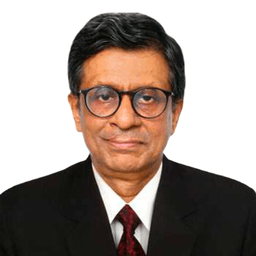
In this interview with The Policy Edge, Mr. Sumanta Chaudhuri reflects on his experiences in public administration and India's evolving trade policy. Drawing on his work in district administration and the Ministry of Commerce, he discusses the shift from import controls to trade facilitation, India's negotiations at the World Trade Organization, and the role of evidence, domestic consultation and international alliances in shaping policy decisions.
When you began your career in West Bengal in the mid-1980s, administrators faced difficult working conditions, including labour disputes, community tensions and limited communication infrastructure. How difficult was it to make decisions in those circumstances?
My first posting was at Kalyani, a relatively new subdivision about 40 to 50 kilometres from Calcutta. The day I arrived; the area was affected by severe floods. Infrastructure was limited, and communications were rudimentary. We had to use the police wireless network at the police station to coordinate rescue efforts and basic supplies. The value of coordination with all concerned agencies and pursuing a clear, common goal was driven home by these early experiences.
My subsequent postings took me to undivided Medinipur, Birbhum and Cooch Behar, each with its own administrative and social context. Medinipur's sheer geographical spread made administration challenging. Cooch Behar had been a princely state, and its traditions remained important to the local population. Shortly before I took over, the Madan Mohan idol, which held immense religious and cultural significance for the Koch community, was stolen from its temple. The incident created considerable tension, including a community boycott of Durga Puja, and required careful handling of local sentiments.
Trade unionism was also a significant feature facing administration. There were occasions when the two major unions would contest almost every issue. As a young Sub-Divisional Officer, my initial instinct was to explain my point of view. I soon realised that it was often better to listen, create an amicable environment and find a way forward. At times, we had to identify those within the groups who were willing to engage and work through them to reach others. This required patience and judgement: listening to people's concerns while remaining firm about the rules. This approach also helped me undertake several initiatives to develop the rural economy.
When you joined the Ministry of Commerce in 1996, India's import policy still required licences for a wide range of goods. How did the effort to simplify this system evolve?
In those days, we had what was called the Export and Import Policy. Upon joining the Ministry, I asked my personal staff for a copy, expecting a single volume. Two people arrived with several volumes so bulky that they could barely carry them. India's total merchandise trade amounted to only around US$80 billion. I remember wondering how many pages of policy were needed to govern each billion dollars of trade.
Liberalisation had begun in 1991, but many goods remained on the negative list and required import licences. The World Trade Organization (WTO) had also ruled against India's continued use of quantitative restrictions on imports , providing further impetus for reform.
My mandate was to thoroughly review and liberalise the system. The bulky volumes were replaced by a much smaller document containing a limited negative list. Restrictions would now apply only to specified items, with other imports permitted under the Open General License (OGL)
The Export and Import Policy subsequently became the Foreign Trade Policy. The Directorate General of Foreign Trade (DGFT), formerly the Controller of Imports and Exports, also reflected this transition. These changes marked a wider shift from controlling imports towards promoting and facilitating trade, reducing compliance burdens and supporting exporters through a range of export promotion schemes.
When you began working on WTO matters, India had a relatively small pool of officials, lawyers and researchers with expertise in trade rules and dispute settlement. How did you build institutional capacity in such a technically demanding area?
When I moved into the Trade Policy Division, which handled WTO matters, there were only three or four of us managing a wide range of responsibilities. I was assigned amongst many others, trade in services and Dispute Settlement System (DSM) – two areas where expertise was limited both within government and more broadly. Exposure to the WTO’s DSM was hugely beneficial; it required me to read and understand all WTO agreements.
Two significant disputes were under way at the time: India's balance-of-payments-related import restrictions and the dispute concerning pharmaceutical patents. We had to develop the necessary legal and technical understanding while responding to these immediate challenges.
I worked closely with an Indian lawyer who was perhaps the only one then with knowledge and experience of the WTO DSM, along with a highly acclaimed foreign lawyer. We prepared submissions for WTO panels together. We realised that relying on such limited expertise was not sustainable and that we needed to develop local talent in trade law and provide opportunities for professionals to gain experience. We also helped establish a WTO chair at the National Law School of India University in Bengaluru. Gradually, more lawyers entered the field, law firms started taking up trade-related work, and younger professionals-built careers in trade law. It was a privilege to contribute to this transition, and I also had the opportunity to work with many of these professionals and learn from their expertise.
The broader lesson, in my view, is that institutional capacity cannot be created overnight. Officials must develop expertise while dealing with actual policy problems. At the same time, lawyers, researchers, think tanks and public policy practitioners need opportunities to develop their capabilities and contribute to the country's ability to engage with complex international rules.
In international negotiations, a country may have a well-developed position but still struggle to secure support from others. How did you build alliances, and what made them sustainable?
One of the most important lessons in international negotiations is that you cannot succeed alone. You may have the best proposal, supported by sound reasoning, but without other countries' support, it is unlikely to make much headway. It is often better to accommodate different perspectives and build wider support than to insist on a position that nobody else is prepared to back.
I saw this during the Doha Round of WTO negotiations in 2001. There were significant differences over whether investment, competition policy and government procurement should be brought into the WTO negotiating agenda. Developing countries had serious reservations, but there was considerable pressure to include these issues.
At the Doha Ministerial meeting, where I was assisting the Union Commerce Minister, we took a firm position against their inclusion. Sustaining this required engagement at several levels, among ministers, secretaries and ambassadors in Geneva. We had to explain our reasoning, understand other countries' concerns and show why these issues mattered to their interests as well.
There were setbacks. I remember representatives of a group of countries telling us they had been offered assistance for backing a particular position. It showed how difficult sustaining alliances could be. In 2003, at the Cancun ministerial conference, the European Union's Trade Commissioner, Pascal Lamy, offered to drop investment, competition policy and government procurement as new issues from the WTO agenda. This was an important outcome for developing countries that had opposed their inclusion.
Evidence and technical analysis were equally important. Many developing countries had small administrative teams and limited access to specialised research or legal expertise. We developed data and arguments they could use to assess the implications of proposed rules and determine their own positions.
Agriculture was one such example. India worked on public stockholding and food subsidies, including the implications of WTO rules for developing countries. Some had not fully assessed whether their domestic support measures might approach or exceed the applicable limits. By sharing research and explaining the calculations, we helped them recognise similar concerns and engage in the discussion on public stockholding.
Alliances become more durable when countries recognise their own interests in an issue, rather than simply supporting another country's position. This also requires listening to countries outside the coalition, understanding their concerns and accommodating them wherever possible.
Trade negotiations can have far-reaching consequences for domestic policies on agriculture, food security, labour and industry. How did the Ministry of Commerce reconcile its negotiating responsibilities with the concerns of domestic stakeholders?
This is one of the most difficult aspects of trade policy. The Ministry of Commerce is the nodal ministry for trade negotiations, but responsibility for affected sectors lies across government. Depending on the issue, the relevant ministries and departments may include Agriculture; Consumer Affairs, Food and Public Distribution; fisheries; and animal husbandry. Each has its own mandate and domestic objectives, which may differ from the considerations guiding the Commerce Ministry in negotiations.
The challenge is to understand these constraints and examine how far domestic concerns can be accommodated alongside the interests of India's trading partners. This requires extensive discussion, explanation and compromise.
Consultation must also extend beyond government. Farmers' organisations, industry associations, export promotion councils and civil society groups have legitimate interests in different aspects of trade policy. Their concerns need to be heard and assessed.
I remember the consultations ahead of the Doha Ministerial Conference in 2001, when there was considerable concern about labour issues entering the WTO negotiating agenda. The Seattle Ministerial Conference in 1999, where protests had brought labour and other issues into sharp focus, had heightened these sensitivities. India opposed including labour in the WTO negotiating agenda, but we also had to explain our position to trade unions, Parliament, NGOs and the concerned government departments, addressing fears that the issue might be conceded during negotiations.
India's implementation of the WTO intellectual property (IP) agreement raised difficult questions about pharmaceutical patents, affordable medicines and domestic innovation. What does this experience tell us about the role of evidence, parliamentary engagement and international negotiations in shaping trade policy?
The debate over pharmaceutical patents was one of the most challenging issues we dealt with. India had signed the Agreement on Trade-Related Aspects of Intellectual Property Rights (TRIPS) in 1995 and had to amend its patent legislation by 2005. Its existing regime did not provide product patents for pharmaceuticals and agricultural chemicals as required under the new framework.
There were concerns that pharmaceutical patents would raise medicine prices and make essential drugs inaccessible to poorer sections of the population. Changes to the IP regime also raised questions about farmers' access to seeds and agricultural inputs. Others argued that stronger patents could encourage domestic innovation and support India's pharmaceutical industry. We had to reconcile these competing considerations with our international obligations and policy interests.
Along with several colleagues, I participated in consultations on the proposed amendments. We visited political parties and parliamentarians, explained the provisions and listened to their concerns. Some strongly opposed the legislation; others raised substantive questions that helped us understand its implications. We made adjustments in response.
The international dimension was equally important. At the 2001 WTO Ministerial Conference in Doha, members adopted the Declaration on TRIPS and Public Health, affirming that the agreement would not prevent measures to protect public health and promote access to medicines for all. This was particularly important amid the HIV/AIDS epidemic in Africa and the prohibitive cost of treatment. This allowed generic medicines from developing countries like India, Brazil and South Africa to be made available at significantly lower costs to those who needed them most.
The patent legislation was ultimately amended in stages, in 1999, 2002 and 2005, with the Doha Declaration also informing the amendments.