

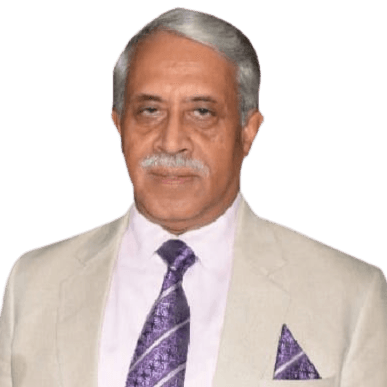
In this interview with The Policy Edge, Mr. Desh Deepak Verma reflects on what district administration, public service delivery, and policymaking reveal about the foundations of state capability. Drawing on his experience from some of Uttar Pradesh's most challenging administrative assignments, he discusses how public trust, institutional coordination, and implementation realities shape effective governance.
During your tenure as a District Magistrate and Commissioner, you navigated periods of intense communal mobilisation and public unrest. In such situations, is formal authority sufficient to build legitimacy?
During my tenure in districts such as Aligarh and Bareilly, the Ram Janmabhoomi movement was at its peak. Emotions were running very high, and every day brought a new challenge. In such situations, people are not merely watching what the administration does; they are judging whether it is fair and then whether it is firm.
I still remember the period immediately after the demolition of the Babri Masjid. On the day it was demolished, despite the curfew, lakhs of people came out onto the streets. I was out monitoring the law and order situation. I have a photograph from that day in which my vehicle is barely visible amid the surge of the crowd. In situations like these, you cannot manage a crowd merely through police deployments. What helps is your reputation, the trust people have in you, and your connect with them. Over time, people develop confidence that the administration will act fairly and without prejudice. It was that confidence that enabled me to step out of my vehicle with just four or five police personnel around me, speak to the people, listen to them empathetically, and gradually persuade the crowd to disperse peacefully. That, in my view, is the greatest strength of an administrator. The use of brute force or administrative authority alone can never be an effective substitute.
I remember another incident in Bareilly when communal tensions had escalated and, in my view, some excesses had taken place during house-to-house searches by the police. Accompanied by the noted poet Wasim Barelvi, whom I had nominated as Chief Civil Defence Warden, I walked into localities where even heavily armed police personnel were hesitant to enter. We went into people’s homes, spoke to those who were aggrieved, listened to their concerns, and reassured them. This approach worked remarkably well. There was no slogan shouting, no violence, and no hostility. Instead, it helped restore confidence and normalcy much more quickly.
Many think that authority comes from the office one holds. My experience has been somewhat different. Whether in the field or in government ministries, people are willing to accept authority when they believe that the person occupying the office is receptive to their grievances and will act fairly. That credibility is built slowly through one’s conduct. When a crisis arrives, it becomes an administrator’s most valuable asset.
Your experience in remote parts of Almora exposed you to implementation challenges that are often invisible from state capitals. How did administrators ensure that public systems adapt to local realities rather than expecting citizens to adapt to administrative convenience?
Early in my administrative career in Almora, I developed a real zeal for working at the grassroots level.
Many people in the plains may not realise how remote some parts of the district were. There were villages beyond Kapkot, then part of Almora district, from where people had to walk for a day or two simply to reach a pucca road. Only then could they board a bus to Almora, often spending a night on the way. Realising this, the first thing I did was change the timing of my public hearings. Earlier, people were expected to meet the District Magistrate only in the forenoon. I introduced an afternoon session as well because many villagers could reach the district headquarters only by late afternoon.
I also travelled extensively, often on foot, from village to village. One issue that stood out was the difficulty pensioners faced in collecting their pensions. Many had to spend several days and considerable money merely to receive what was due to them. I discovered that the rules allowed a treasury to function outside its normal location under specified circumstances. So we created what I called a “moving treasury”. Whenever I went on tours and padyatras, treasury officials travelled with me carrying cash chests. Villagers were informed in advance, and pension payments were made on the spot. The provision already existed; we simply used it differently.
Policymakers often assume that citizens will adapt to government rules, guidelines and systems. Good administration, however, requires these rules and systems to be aligned with people’s needs and to remain practical. The closer one gets to the ground, the easier it becomes to identify small changes that can make public systems more accessible, responsive and humane.
That also raises an interesting question about how different arms of the administration work together while having different mandates and chains of command. What prevents these relationships from becoming contests of authority, particularly during periods of uncertainty or public disorder?
There is often a perception that District Magistrates and Superintendents of Police compete for authority in the districts. My own experience has been very different.
The years spent together in district administration are among the most valuable years of one’s career. The relationships you build with your SSP, DIG and other colleagues often remain with you for life. These are golden years and should not be wasted on ego battles.
What ultimately matters is whether the administration has a larger purpose before it. During periods of communal tension or public disorder, the real challenge is not whether the District Magistrate has greater authority than the SSP, or vice versa. The challenge is whether the administration is able to solve the problem at hand and win the confidence of the people.
I found that if you develop the knack of carrying the head of the police force along and work with him as a partner in difficult situations, many inter-departmental differences become irrelevant. In the process, you also earn his respect.
The same lesson applied later in my career while working with different departments and institutions. Coordination becomes much easier when people focus on solving the problem at hand rather than defending organisational boundaries. Once that happens, institutions tend to perform far better than their formal structures alone would suggest.
Your career extended far beyond district administration. You have worked across district administration, state government, the Union government, regulatory institutions and Parliament. What does each level reveal about how the Indian state functions, and where its greatest strengths and constraints lie?
Every level of governance teaches you something different.
District administration teaches you implementation. Policies, schemes and decisions are judged by whether they produce outcomes on the ground. Citizens are generally not interested in administrative complexities. They want solutions to their problems, and rightly so.
When you move to the state government, the perspective changes. There, one begins to appreciate the challenge of coordination. No department functions in isolation. Finance may have one view, planning another, and the political leadership its own priorities. Much of the work involves building consensus and finding ways to move forward despite these differing perspectives.
One challenge I often observed at the state level was the limited time officers get in departments. By the time an officer understands the subject thoroughly, develops a working relationship with the political leadership, and begins implementing long-term ideas, he is often moved elsewhere. Continuity remains one of the enduring challenges of governance.
Looking back, the strengths of the Indian state lie in its resilience and its ability to function across extraordinary diversity. Its constraints often arise from limited continuity. Across different levels of government, I found that effective governance depends not only on sound institutions but also on the quality of relationships, judgment and persistence that sustain them over time.
Having worked on both implementation and policymaking, what distinguishes policies that are merely well-intentioned from those that are actually implementable at scale?
The biggest difference between implementation and policymaking is that they require different kinds of skills.
At the district level, your challenge is to make programmes work better, solve problems quickly, and adapt to local circumstances. When you move into policymaking, however, you have the opportunity to shape the framework itself.
One lesson I learnt early was that lasting improvements rarely come from enforcement alone. Many officers believe that if a problem exists, it can be solved through stricter supervision, more inspections, or disciplinary action. Sometimes those measures are necessary, but they do not always address the underlying issue. Real improvement comes when you understand why a system is producing poor outcomes and then redesign the system itself.
This is where the debate between generalists and specialists becomes important. Specialists bring deep domain knowledge and an understanding of emerging developments. Generalists bring the ability to coordinate across departments, reconcile competing priorities, and convert ideas into programmes that can actually be implemented. Good governance requires both.
Ultimately, policymaking is about designing solutions that are both intellectually sound and practically workable. My years in administration convinced me that policy and implementation cannot be viewed separately. Each strengthens the other, and continuous interplay and mid-course corrections are required.