



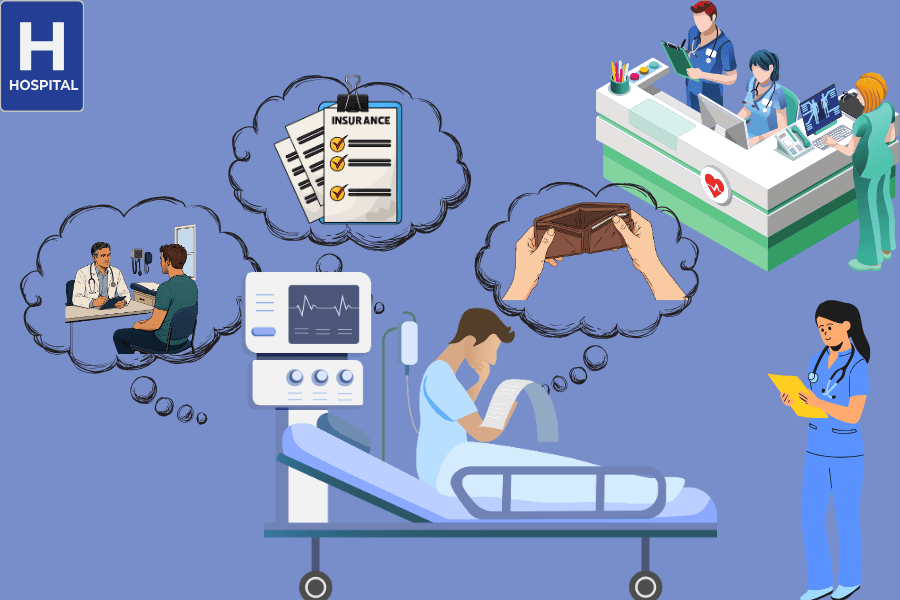
The National Health Accounts (NHA) 2022-23 data tells a story of substantial progress in health financing. Government health expenditure has nearly tripled over the past decade, rising from ₹1.30 lakh crore to ₹3.85 lakh crore, while the public share of total health expenditure has increased from 28.6 percent to 43.7 percent. Ayushman Bharat has issued more than 36.9 crore cards, extending financial protection to millions of households.
Yet the same dataset points to a persistent feature of India’s health system. Out-of-pocket expenditure (OOPE) still accounts for 43.4 percent of total health spending, amounting to ₹3,82,629 crore in 2022-23. Per capita household spending on healthcare also increased from ₹2,415 in 2020-21 to ₹2,767 in 2022-23.
The NHA data therefore raises a question that may shape the next stage of India’s health-financing reforms: why do households continue to bear a substantial share of healthcare costs even as public financing expands? Answering that question may shape the next stage of India’s health-financing reforms.
Beyond the Pandemic Distortion
The NHA data suggests a more cautious reading of the oft-quoted decline in OOPE to 39.4 percent in 2021-22, which is often interpreted as evidence of a sharp improvement in financial protection.
During the pandemic, emergency government expenditure increased the public share of total health spending, while lockdowns and disruptions reduced household utilisation of many health services, particularly elective care. Both developments temporarily altered the balance between public and private spending.
The rise in OOPE to 43.4 percent in 2022-23 therefore offers a clearer picture of underlying financing patterns once pandemic-era distortions receded. The persistence of household spending under these conditions directs attention to a different question: not whether OOPE remains high, but where it remains concentrated.
Where Households Still Pay
Prescribed medicines accounted for ₹1,34,572 crore of household spending in 2022-23. Diagnostics and imaging contributed ₹26,708 crore, while patient transportation added ₹21,394 crore. Together with over-the-counter medicines, these categories accounted for more than 56 percent of all out-of-pocket expenditure. Together with over-the-counter medicines, these categories accounted for more than 56 percent of all out-of-pocket expenditure.
The composition of this spending is significant. These are recurring costs associated with seeking and managing care, rather than one-time hospitalisation events. The pattern also reflects broader changes in India’s disease profile. A growing share of the disease burden is chronic and outpatient-based, requiring medicines, diagnostics and regular consultations over extended periods.
India’s principal financing instruments, however, remain organised around hospitalisation. Ayushman Bharat Pradhan Mantri Jan Arogya Yojana (AB PM-JAY), Employees’ State Insurance Scheme (ESIS) and most voluntary insurance products provide financial protection for inpatient care, while many recurring healthcare costs continue to be borne by households.
The expenditure matrices therefore reveal a disconnect between where households incur healthcare costs and where financial protection is concentrated.
Financing Versus Protection
The state-level data suggests a layered reality beneath the expenditure patterns. Bihar's per capita government health expenditure stood at ₹1,056 in 2022–23, lowest in India. Several other large states also fell short of the approximately ₹2,000 per capita threshold estimated by Nachiket Mor and Sudheer Kumar Shukla for achieving universal health coverage, including Uttar Pradesh (₹1,419), Jharkhand (₹1,536), Madhya Pradesh (₹1,827), and Punjab (₹1,946). For such states, expanding fiscal commitment remains a necessary priority if health systems are to provide meaningful protection at scale.
Yet higher spending does not automatically resolve the problem. Delhi spends ₹7,950 per capita on health, Himachal Pradesh spends ₹5,913 and Kerala spends ₹3,592. Even then, none has achieved universal health coverage. Crossing a financing threshold appears to be an important step towards universal health coverage, but it does not by itself determine whether households are protected from healthcare costs.
The Lancet Citizens’ Commission on India’s Health System identifies several institutional barriers that weaken the translation of spending into protection, including fragmented financing streams, rigid budgeting systems, weak purchaser-provider separation and medicine stock-outs despite procurement allocations. The experience of the ESIS, which holds accumulated reserves of roughly ₹78,000 crore, illustrates the same challenge: resources can exist within the system without necessarily improving service utilisation or reducing household expenditure.
Taken together, two distinct challenges are evident. Some states continue to face genuine financing constraints. Others face the equally important task of converting expenditure into protection.
The Missing Layer of Coverage
Taken together, the NHA findings and wider evidence on health-system performance point towards three priorities for the next phase of health-financing reform.
Extending financial protection beyond hospitalisation is the most important step in India’s health-financing journey. Incorporating essential outpatient consultations, medicines and primary diagnostics into publicly financed care would align financial protection more closely with how households actually experience illness and seek treatment.
Medicines deserve particular attention because they remain the single largest contributor to OOPE. Tamil Nadu’s experience with pooled procurement demonstrates how purchasing reforms can improve availability while reducing costs. Wider adoption of pooled procurement systems, supported by stronger generic prescribing and prescription oversight, could substantially reduce the financial burden borne by households.
A broader shift in financing incentives is equally important. Payment systems that reward prevention, continuity of care and population health management create stronger incentives for keeping people healthy rather than treating illness only after it becomes acute. Moving beyond rigid line-item budgeting towards financing approaches that support integrated and accountable care is particularly relevant in this regard.
Together, these reforms would shift the focus of financial protection from episodes of hospitalisation to the broader costs of living with illness. As India’s disease burden continues to evolve, the effectiveness of its financing architecture will increasingly be judged not only by how much it spends, but by how effectively it reduces the costs borne by households.