


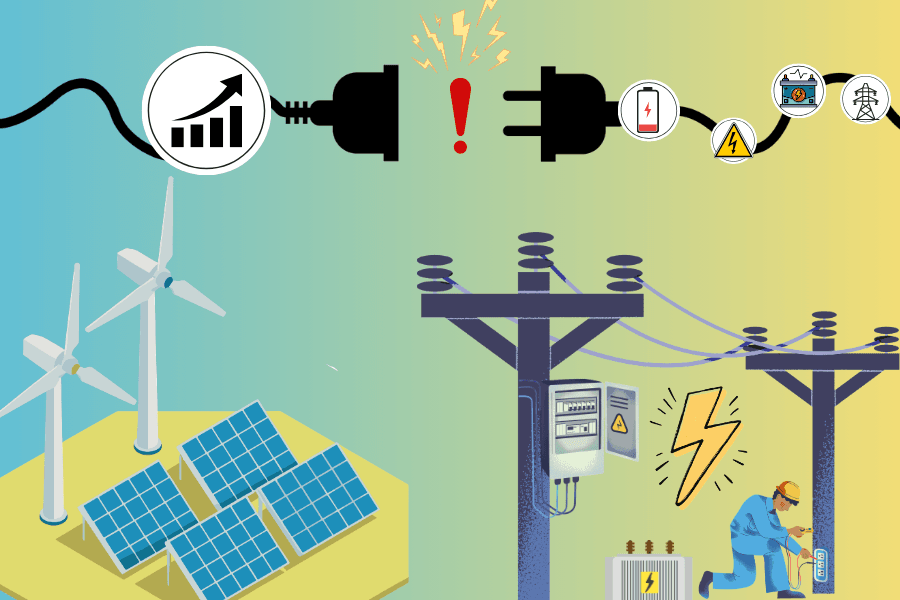
The commitment made at COP28 in Dubai to triple global renewable energy capacity to 11,000 gigawatts by 2030 has accelerated investment in solar and wind power. Solar photovoltaics have become the fastest-growing source of new electricity generation, supported by record public and private investment.
Yet the energy transition is entering a different phase. For much of the past decade, the principal challenge was adding renewable capacity quickly enough to reduce dependence on fossil fuels. Today, many electricity systems face a different constraint: absorbing, transmitting, storing and pricing growing volumes of renewable electricity.
As renewable penetration increases, the bottleneck is shifting from generation to flexibility. The consequences are becoming visible in the operation of power systems, the behaviour of electricity markets, the financing of utilities and the adequacy of transmission infrastructure. Countries that succeed will strengthen these supporting systems as rapidly as they expand renewable capacity.
When Generation Outruns Demand
The first signs of this transition are visible in the growing mismatch between when renewable electricity is generated and when it is consumed. Solar output peaks around midday, when electricity demand is subdued. As the sun sets, however, solar generation falls rapidly just as households and businesses increase electricity consumption. The resulting gap, commonly illustrated through the “duck curve”, requires power systems to increase generation sharply within a short period.
This changing demand profile is reshaping the economics of electricity generation. Thermal power stations that once operated continuously as baseload plants increasingly serve as flexible backup, running fewer hours while being required to ramp output much more frequently. Lower utilisation reduces revenues, while repeated cycling raises maintenance costs. The duck curve is increasingly visible across North America, Europe, Australia and parts of Asia as renewable penetration has grown.
The operational mismatch created by the duck curve increasingly spills over into electricity markets. During periods of abundant solar or wind generation, wholesale electricity prices can fall sharply, sometimes reaching zero or even becoming negative as supply exceeds demand and grids struggle to absorb surplus electricity.
In May 2026, Germany’s intraday electricity prices fell to a record low of minus €855/MWh amid strong solar and wind generation and subdued holiday demand before rebounding to around €245/MWh within hours as renewable output declined. The volatility illustrates a broader shift in electricity markets. Systems historically designed around scarcity must increasingly manage periods of temporary abundance, creating new uncertainties for generators, investors and market operators.
When Renewables Fall Short
Periods of surplus generation reveal only one side of the flexibility challenge. Electricity systems must also cope with prolonged periods when renewable output falls simultaneously.
Often referred to as Dunkelflaute, these episodes of weak wind and solar generation require greater reliance on dispatchable generation, energy storage or electricity imports. As available supply tightens, wholesale electricity prices can rise sharply, with some markets recording prices exceeding €500/MWh during prolonged renewable shortfalls.
Recent experience across Europe and Australia demonstrates that electricity systems increasingly need to manage both extremes: absorbing excess renewable generation during periods of abundance while maintaining reliable supply when renewable output falls unexpectedly.
Why Flexibility Requires More Than Batteries
The search for greater flexibility has placed energy storage at the centre of the renewable transition. Grid-scale battery energy storage systems are being deployed rapidly to store surplus renewable electricity during periods of excess generation and release it during evening demand peaks. Their ability to respond within seconds also makes them valuable for maintaining grid frequency and managing short-term fluctuations.
However, batteries solve only part of the flexibility challenge.
Most commercial battery systems are designed to discharge at full capacity for roughly two to four hours. This makes them highly effective for shifting solar generation across the evening peak or smoothing temporary fluctuations in renewable output. They are far less suited to managing multi-day or seasonal periods of weak wind and solar generation, when electricity systems require sustained backup rather than short-duration balancing.
Building flexibility therefore requires a broader portfolio of solutions. Pumped hydro storage, long-duration storage technologies, flexible thermal generation, demand-response programmes, improved forecasting and stronger inter-regional electricity transmission all complement batteries by addressing different dimensions of variability.
Transmission Cannot Lag Generation
Flexibility also depends on the ability to move electricity efficiently across regions. Renewable resources are often located far from major centres of demand, making transmission networks central to integrating new capacity.
Meeting global renewable targets will require an unprecedented expansion of electricity networks. More than 25 million kilometres of new or upgraded transmission and distribution lines may be needed by 2030, yet only around 1.5 million kilometres have been added over the past decade. In many countries, transmission development is proceeding more slowly than renewable deployment, creating congestion that delays projects, increases curtailment and limits the value of new generation.
Without comparable investment in transmission infrastructure, renewable capacity risks remaining geographically abundant but operationally inaccessible.
Solar Prosperity, Grid Poverty
The challenges of renewable integration are not confined to grids and markets. In many developing economies, they are also reshaping who pays for the electricity system itself.
Decentralised rooftop solar that is expanding rapidly across parts of Asia, Africa and the Middle East, allows wealthier households and businesses to reduce their dependence on unreliable grids. As these consumers purchase less electricity from the grid, utilities risk losing many of their highest-paying customers while remaining responsible for maintaining the same transmission and distribution infrastructure.
The consequences extend beyond utility balance sheets. Fixed network costs must be recovered from a shrinking customer base, increasing pressure on tariffs for households unable to afford rooftop solar. As utility revenues weaken, investment in grid modernisation, maintenance and transmission expansion also becomes more difficult, potentially reinforcing inequalities in access to reliable electricity.
The renewable transition therefore raises not only technical questions about balancing electricity systems but also distributional questions about who bears the costs of maintaining them.
India’s Next Renewable Challenge
These global trends are beginning to emerge in India as renewable deployment accelerates.
India has reached an important stage in this transition. Solar and wind now account for more than 38 percent of installed electricity capacity, while non-fossil sources together contribute over 53 percent of total installed capacity. These achievements demonstrate the country’s ability to deploy renewable energy at scale.
The next challenge is ensuring that supporting infrastructure keeps pace.
Transmission bottlenecks have already delayed tens of gigawatts of renewable projects. Midday demand troughs and steep evening ramps are becoming increasingly common, while solar curtailment exceeded 2,300 GWh between May and December 2025 and continued into 2026 as grids struggled to absorb additional generation.
India’s priorities must now evolve from adding renewable capacity alone to improving system flexibility. Expanding transmission corridors, strengthening interstate power exchanges, investing in storage technologies and widening the use of time-of-day tariffs can all help align electricity demand more closely with renewable supply. Load forecasting, particularly precise net-load forecasting, is another area that needs attention. Equally important will be maintaining a balanced generation mix capable of supporting reliability during prolonged periods of weak renewable output.
India enters this phase with an important advantage. Many of the operational and market challenges associated with high renewable penetration have already emerged elsewhere, providing valuable lessons before similar pressures become deeply embedded in India’s own power system.
The first phase of the energy transition was defined by the race to produce clean electricity. The next phase will be determined by whether electricity systems can absorb it, move it, store it, price it and deliver it reliably. Countries that solve that challenge will capture the full economic and environmental benefits of renewable energy. Those that do not may find that renewable capacity grows faster than the systems designed to support it.