

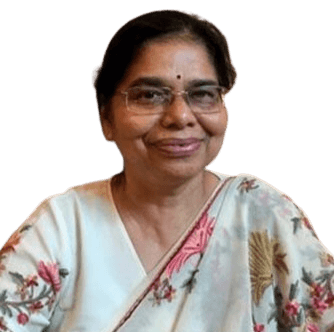
In this interview with The Policy Edge team, Ms. Snehlata Shrivastava reflects on what working across district administration, public finance, the justice system, and Parliament reveals about how the Indian state functions in practice.
What do your early years in district administration reveal about how governance actually works across crises, welfare situations, and institutional coordination?
After IAS training at Mussoorie, I was posted as Assistant Collector in Indore. I worked under Shri A.P.K. Jogi, whose approach to administration reflected a high level of capability and commitment.
Soon after, as an SDM in Mhow, I faced a serious law-and-order situation following the assassination of then Prime Minister Smt. Indira Gandhi. There were very limited police personnel available at that time, and the situation was tense in Indore and Mhow. Even a rumour could escalate the situation. I had to call the army for Indore and later for Mhow to control the situation. I went to the army headquarters immediately and explained the urgency of the situation. I was asked for a written requisition, which I provided immediately. The army was deployed, curfew was imposed, and the situation remained under control.
In another instance, during a family planning camp, a woman developed complications and had to be taken to the city public Hospital in Indore at night. Despite all efforts, she passed away. That situation could have escalated, but we went back to the village with the body, stayed through the night, ensured the funeral was conducted in the morning, and provided the due compensation.
Later, as Collector in Mandsaur, I dealt with a case involving smuggling linked to poppy cultivation. There appeared to be a coordination gap between the police and the judiciary, as accused persons were getting bail quickly while concerns persisted about the strength of cases presented. I met the District Judge and the Superintendent of Police, discussed the issue and the stakes for the state. For the first time, that smuggler was jailed.
Across these experiences, one realises that administration is not about applying rules in a fixed manner. You often have to act without prior experience, with limited resources, and under pressure. At the same time, outcomes depend not only on your actions but also on how different institutions including the police, judiciary, administration, work together.
Later, you were involved with relief and rehabilitation following the Bhopal Gas Tragedy. Such large-scale crises often test the limits of the state. What did your experience reveal about how such responses unfold over time?
The scale of the problem was immense. It was not just about those who had lost their lives, but also about long-term health issues, loss of livelihoods, and the condition of the areas where people were living. There were also rumours about further gas leaks in some pockets. The psychological effect was very strong.
The response required operating at multiple levels. Compensation was given to families, women were trained in tailoring and other skills as an alternative livelihood opportunity, loans were given, and efforts were made to provide employment.
At the same time, the most affected areas in old Bhopal had problems with sewage, drinking water, and roads. So, infrastructure improvements also became a key priority.
It also required continuous engagement with people to diffuse rumours, not just immediate relief.
Bhopal was indeed tragic. Later, your roles involved budgeting and multilateral institutions, which typically are shaped by both internal constraints and external discipline. How did you experience this interplay?
As Director of Budget, the work was very intensive and time-bound. I remember working till 3 a.m. and then going to the Assembly in the morning.
Departments would propose their requirements, such as provisions for new schools, hospitals, irrigation projects, based on their assessment of needs. At the same time, political leadership would also have a priority list of projects, often based on constituency and beneficiary dynamics.
While these created pressure on the budget, the fact that the government approaches tax increases cautiously due to their impact on people, everyone had to find ways to balance the numbers.
Later, in the Department of Economic Affairs, I coordinated with institutions like the World Bank and Asian Development Bank. These institutions provide long-term loans, These institutions provide long-term loans, but continued funding depends on adherence to their processes.
These constraints and processes improve implementation quality. There is better monitoring with external review mechanisms reinforcing implementation discipline.
Your roles in the tax administration and the justice system involved designing processes that directly dealt with government officials, including those in the services. What does it take to build trust and coordination in such systems?
In the Central Board of Direct Taxes, officers had to submit their service and posting details manually for transfer decisions, and there was a need to improve consistency and transparency in the process. We introduced a system where officers themselves could upload their information. Decisions were then taken based on that data.
This reduced complaints because the information was provided by the officers themselves. It also made the system more transparent and easier to manage.
Later, in the Department of Justice, the initiatives like Tele-Law, enabled people to get legal advice online from empanelled lawyers without having to travel. The Judicial Data Grid was also developed to make case information accessible. Case status, orders, and details became available online.
At the same time, there were structural challenges in the justice system. Infrastructure was often inadequate, staff shortages were there, and delays were a continuing concern in many cases. The immediate response is often to increase the number of judges, and that is important, but on its own it does not resolve the problem.
The system depends on multiple parts functioning together: police for investigation, prosecutors for presenting cases, and court staff for managing records and processes. If these do not keep pace, increasing judicial capacity alone does not necessarily translate into faster resolution.
There is also the question of what kinds of cases are coming into the system. Many smaller disputes could be resolved through mediation, but they still end up in courts, adding to the overall load. So the challenge is not just capacity, but also coordination across institutions and managing the inflow of cases.
So whether it is internal administrative systems or citizen-facing services, it ultimately comes down to design. With participation and transparency, trust follows naturally.
You served as Secretary General of the Lok Sabha during the 2019 elections and the onset of COVID-19. What does it take to maintain institutional functioning under such conditions?
During COVID, the priority was to ensure that Parliament continued to function, while at the same time adhering to public health requirements like social distancing. The usual functioning of the House depends on members being physically present in a shared space, so the limitation of space in Lok Sabha and Rajya Sabha created a significant constraint.
We explored several options, including alternative venues such as a stadium, but any such shift also had to preserve the dignity and procedural requirements of Parliament. Finally, we decided on staggered sittings. Lok Sabha and Rajya Sabha sessions were held at different times, and members were seated across both Houses and galleries. Technology was used so that members could follow proceedings even if they were seated separately. Voting, however, had to be conducted manually during this period, which required additional time.
During the 2019 elections, the challenge differed. As soon as results were declared, arrangements had to be made for newly elected Members of Parliament: travel, accommodation, registration, and familiarisation with procedures. Coordination had to happen from the constituency level to Delhi, and this had to be done quickly and systematically.
In both situations, the underlying requirement was to ensure continuity without compromising the functioning of the institution. Even small errors could have wider implications for proceedings, so the systems had to be carefully managed.
For young civil servants entering the system today, what should they prioritise in their early years?
Every person who enters the civil services is intelligent and motivated, but that is only the beginning. It is essential to understand ground realities.
In the first 10 to 12 years, it is critical to go to the field, interact with people, and learn from frontline staff. If this is not done early, it becomes difficult later.
It is important to remain open to learning beyond formal training and academic knowledge. Governance requires continuous learning.
It is also important to communicate: with political leadership, with colleagues, and with people on the ground. Implementation often requires engagement beyond formal directives. One must understand how to get things done in practice.
So it is a process of learning, adapting, and working with others.