

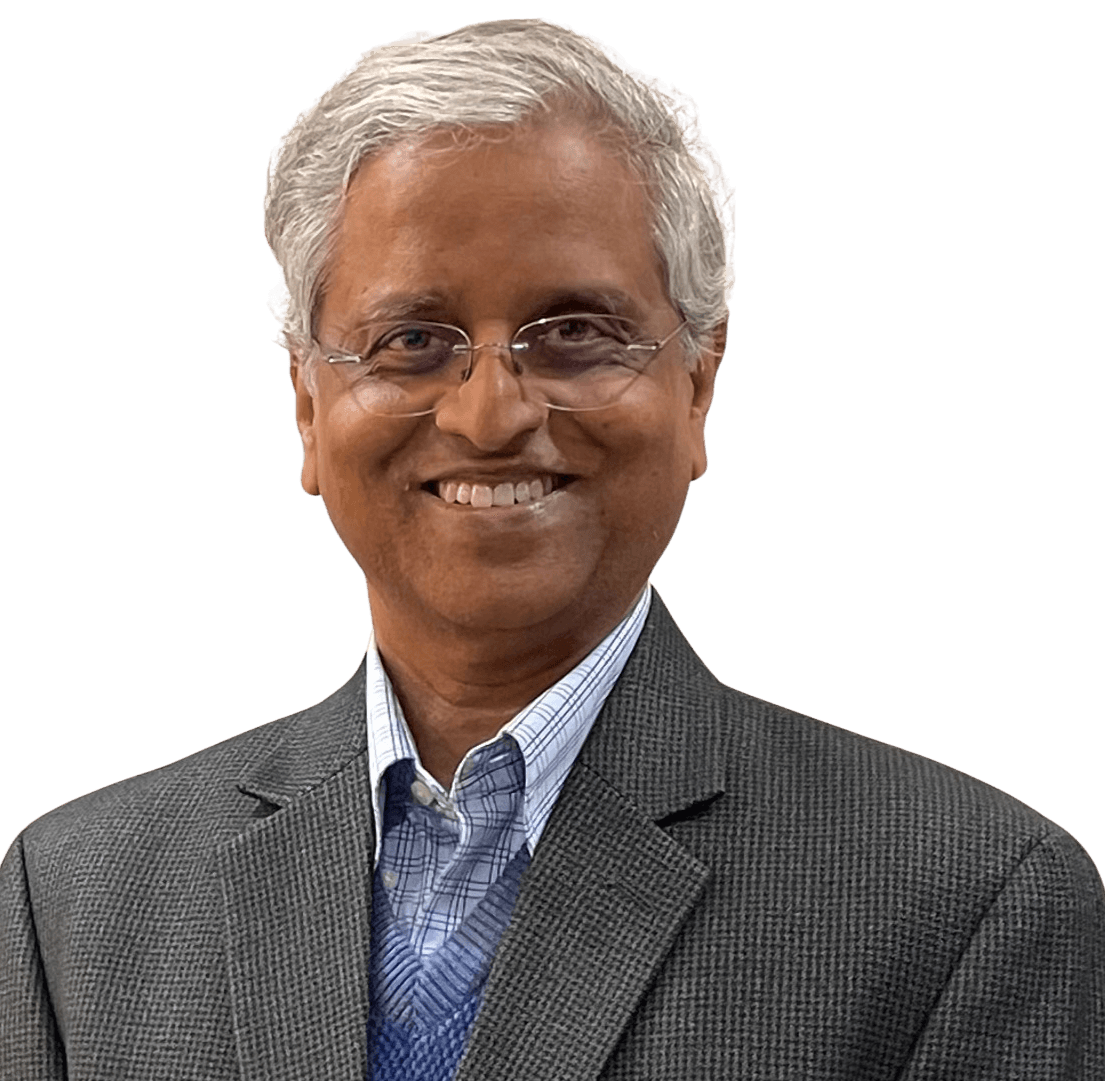
In this conversation with The Policy Edge, Mr. Garg reflects on the practice of policymaking inside government. Drawing on his experience in public finance and economic administration, he discusses how ministries evaluate public spending, the challenges of building an innovation ecosystem in India, the institutional dynamics behind the RBI surplus debate, and the ethical responsibilities of civil servants when professional judgment conflicts with institutional decisions.
From your experience in both state and central governments, how does fund allocation work between the finance ministry and the other ministries?
The main role of the finance ministry is to ensure that scarce public resources generate the maximum possible value.
When I worked in departments such as agriculture or education, I had to approach the finance department with proposals. Before seeking funds, I would ask myself some basic questions. Has something similar been tried earlier? What were the results? Is this the most cost-effective way to achieve the objective? Does the proposal genuinely create value for the public? If these questions are addressed seriously, the finance department is usually not an obstacle.
Later, when I served on the finance side myself, I approached proposals in exactly the same way. The objective was not to block initiatives but to ensure that public money was being used effectively.
In fact, there were occasions when the finance department encouraged other ministries to think more ambitiously. During the interim budget in Rajasthan in 2014, for example, we backed targets such as developing 20,000 kilometres of state highways and significantly expanding solar power capacity. Interestingly, the hesitation sometimes came from the implementing departments, which felt these goals were too ambitious.
So policymaking inside government is less about confrontation and more about structured reasoning and institutional dialogue.
Public debates often portray budgets as intense competition between sectors, such as industry versus education. How are these spending decisions made?
One important fact that is often overlooked is that most government expenditure is already committed. Roughly 90 to 95 percent of the budget goes towards ongoing obligations such as paying teachers and doctors, running schools and hospitals, maintaining infrastructure, servicing debt, and so on.
The real policy debate occurs in the remaining margin, where governments decide which new programmes or reforms to pursue.
Take the case of school education in Rajasthan. We realised that there were too many very small primary schools where one or two teachers were handling multiple classes. This was an outcome of policy thinking that primary schools should be located very close to children’s homes. But as transportation improved and bicycles became common, we realised that proximity is not a binding constraint, and we could focus more on improving learning outcomes. The education department therefore proposed merging smaller schools with larger ones that had more teachers and facilities.
Similarly, we also revisited the traditional donor-supported school model. In many cases, donors funded school buildings while the government bore the recurring costs of teachers and operations. This meant the donor received recognition, but the financial burden largely fell on the government. We restructured this model so that donors also shared part of the recurring costs. That created a more balanced partnership.
So, in most cases, policymaking around the budget is not about choosing between sectors but about improving how programmes are designed.
India often debates whether it should allocate more to R&D, than the current level of around 0.7 percent of GDP. How does the finance ministry, or government in general, look at this problem?
Saying that India should spend 1 percent or 2 percent of GDP on R&D can easily become a substitute for serious thinking.
The real issue is whether the ecosystem actually generates innovation. In India, R&D is not a central priority. Governments allocate some funds, but the outcomes have been limited. Corporate investment in R&D is also relatively modest.
If we ask a simple question: what globally significant technology or product has emerged from India over the past several decades – the answer is not very encouraging. This is because India functions largely as an adapter economy rather than an innovator economy. We adopt technologies developed elsewhere and build services around them.
There is nothing inherently wrong with adaptation. Many successful economies have followed that path. China and other countries in East Asia, for example, spent decades reverse-engineering and learning from technologies developed elsewhere. But over time, they built strong manufacturing capabilities and gradually moved toward original innovation.
This process requires learning, risk-taking, and sustained investment from both the state and the private sector. Simply increasing budget allocations will not solve the problem unless the incentives encourage experimentation and long-term technological ambition.
Your tenure at the finance ministry saw one of the most visible institutional debates in recent years involving the dispute between the government and the RBI over surplus transfers. From inside the government, what was really at stake?
At its core, the debate was about how much of the RBI’s surplus should be transferred to the government and how much should be retained as reserves.
The RBI generates income through its operations, primarily through interest on securities and gains from foreign assets. After making certain provisions from this surplus, the remainder is transferred to the government.
During Raghuram Rajan’s tenure as governor, the RBI began exploring the idea of retaining a larger share of these surpluses. The argument was that the central bank should build larger reserves to strengthen its balance sheet and prepare for potential financial shocks. The issue continued to be debated during the governorship of Urjit Patel.
When I joined the finance ministry as Secretary of Economic Affairs, I examined the proposal in detail. My view was that the case for retaining substantially larger reserves was not convincing.
Eventually, the government constituted the Bimal Jalan Committee to examine the issue and recommend a formal Economic Capital Framework for the RBI. The committee examined two broad categories of reserves on the RBI’s balance sheet: the Contingency Fund, which represents retained cash profits, and the Revaluation Reserves, which arise from changes in the market value of foreign assets and securities.
In its deliberations, the committee scaled back some of the earlier proposals related to valuation reserves and recommended a clearer framework for determining how much capital the RBI should maintain relative to its balance sheet. However, it also proposed that the RBI maintain a higher level of contingency reserves – within a range of roughly 5 to 6.5 percent of its balance sheet.
My view was that the central bank did not require such a large stock of cash reserves for its core functions of currency issuance and monetary operations. I therefore continued to disagree with that element of the framework and recorded a detailed note of dissent explaining my position.
Over time, an arrangement emerged under which the government received substantial surplus transfers while the RBI retained reserves within the recommended range.
That episode eventually led to you leaving the finance ministry. How should civil servants deal with moments when their professional judgment clashes with institutional decisions?
In public service, one must always remain open to reconsidering one’s own views. No individual has a monopoly on the truth, and sometimes another person’s reasoning may be stronger.
Throughout my career, whenever a colleague presented a convincing argument, I had no hesitation in revising my own position.
However, there are situations where, after careful consideration, you remain convinced that a particular decision has fundamental flaws. At that point, you have to decide whether the issue compromises your intellectual integrity. If it does, then you have to take a stand.
In my case, I concluded that the issue involved principles that I felt strongly about. Leaving the position, therefore, did not feel like a difficult decision. In fact, when I returned home after submitting my resignation, I slept peacefully that night.
Integrity in public service is not only about financial honesty; it is also about intellectual honesty.
You also served as Executive Director at the World Bank. What does decision-making actually look like from inside?
The World Bank functions as a cooperative financial institution owned by its member countries.
All member countries contribute capital, and voting power broadly reflects shareholding. Larger economies such as the United States or Japan naturally have greater influence, but developing countries are also shareholders and participate in governance.
Decision-making in this setup is more about negotiation than simple voting. Countries often form coalitions around common interests. Borrowing countries, for example, may coordinate positions when they feel that certain policy conditions or safeguards could impose excessive costs.
I saw several instances where developing countries pushed back against proposals that they believed were unfair or impractical. In some cases, even if the formal vote favoured the larger shareholders, the strength of the argument led to revisions or delays before implementation.
That is why most decisions in institutions like the World Bank are reached through consensus rather than confrontation.
At the same time, the emergence of institutions such as the Asian Infrastructure Investment Bank and the New Development Bank reflects how emerging economies are seeking greater voice and influence in the global financial system.