



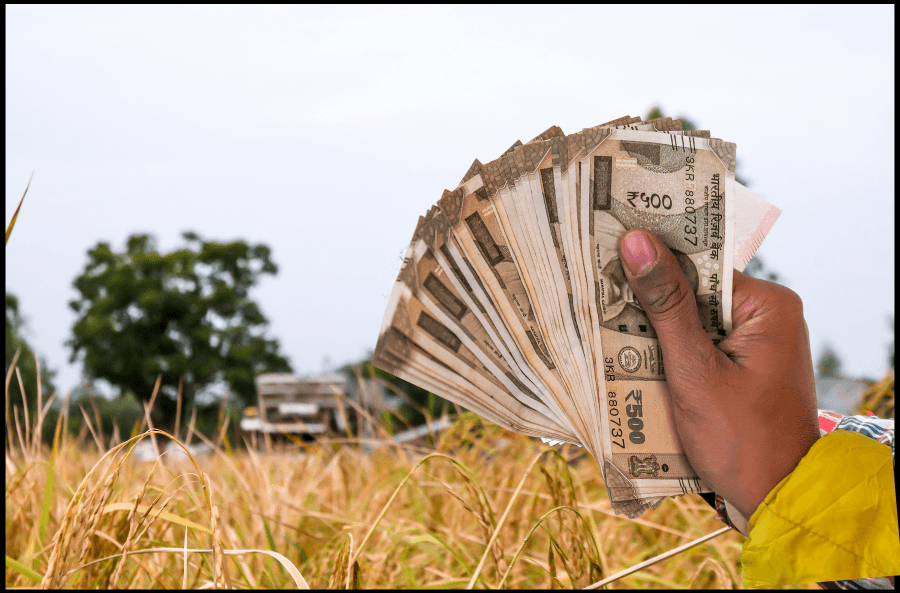
Unconditional cash transfers in agriculture are usually assessed as welfare instruments. Evaluations focus on consumption smoothing, poverty reduction, or intensive labour supply responses, with limited attention to how such transfers might reshape production roles within agriculture itself. Odisha’s Krushak Assistance for Livelihood and Income Augmentation (KALIA) scheme offers a window into this less explored aspect.
The question matters because agriculture remains one of the few sectors where decisions about small-scale hiring can directly shape local employment outcomes. Whether income support alters those decisions is ultimately a question of risk – wages must be paid on time despite uncertain rains, prices, or credit – rather than an assumption about intent.
From Safety Net to Economic Signal
Introduced in 2018–19, KALIA was designed as an unconditional transfer to landless, marginal, and small farmers. Its defining features lay in scale, coverage, and timing rather than in explicit production or employment conditionalities. It eventually covered about 92 percent of farmers in the state, including roughly 51 lakh landowning and 2 lakh landless households. Eligible households received ₹5,000 per season across five cropping seasons between 2018–19 and 2021–22. Post 2021-22, KALIA was dovetailed with the central PM-KISAN scheme and eligible farm families effectively received around ₹10,000 per year in combined support.
The distinctive feature of KALIA was not the headline amount but the credibility and regularity of payments. Transfers arrived on a predictable schedule, becoming embedded in the agricultural calendar.
When Liquidity Changes Who Hires
The most consequential shift following KALIA’s introduction appears in the composition of rural agricultural employment patterns. Using labour-force data from 1999–2000 to 2023–24, Odisha’s post-KALIA trajectory of share of employers in agriculture sector diverges sharply from a counterfactual based on other major states without comparable farm-focused transfers.
On average, after KALIA, the share of employers in rural agricultural employment in Odisha was about 3.6 percentage points higher than that in the synthetic counterpart. This increase started from a very low base: prior to the programme, employers accounted for roughly 0.6 per cent of rural agricultural workers in both Odisha and its counterfactual. In proportional terms, the share of employers rose to around 6 times its pre-programme level. Even from a low base, this marks a clear departure from a sector long dominated by own-account workers and unpaid family labour.
Why Predictability Changes Risk
The mechanism underlying this shift is behavioural. Small farmers often operate with limited buffers. Hiring labour requires committing to timely wage payments even when output prices, rainfall, or yields are uncertain. In such settings, the downside risk of missing a wage payment often outweighs the potential gains from expanding cultivation or intensifying input use. As a result, farmers may forgo hiring even when additional labour would be productive.
By ensuring a known flow of funds during the agricultural season, transfers reduce the perceived risk of committing to wages for one or two workers, and purchasing inputs on time.
For a subset of cultivators, this modest recalibration is sufficient to cross the threshold from family-only cultivation to regular use of hired labour.
Not Big Farms, but Many Small Employers
Equally important is the scale and form this transition takes within agriculture. Alongside the rise in employer share, there has been an overwhelming increase in the small agricultural enterprises – farms hiring between one and five workers. There is no corresponding increase in medium or large employers hiring six or more workers, whose numbers remain extremely small.
This pattern indicates a reorganisation within agriculture. Many cultivators appear to be crossing a narrow threshold: moving from own-account farming – operating without hired labour – to running small farms that regularly employ at least one worker. For rural labour markets, this distinction matters. Small, labour-using farms generate employment close to where people live and can absorb workers without requiring large capital investments or major shifts in land ownership.
A Quiet Reorganisation of Rural Work
Changes in other employment categories reinforce this interpretation. Prior to KALIA, the share of own-account workers in agriculture in Odisha had been rising steadily, reflecting a growing reliance on self-employment without hired labour. In the years following the programme’s introduction, this trend reversed. The share of own-account workers declined sharply, coinciding with the rise in employers.
At the same time, the earlier decline in casual agricultural labour flattened, while the shares of unpaid family workers and individuals classified as unemployed or out of the labour force increased. Although individual worker movements cannot be tracked directly, the combination of these shifts is consistent with some own-account farmers upgrading into employer roles and drawing labour from casual workers and family members. This represents a reallocation of work within agriculture rather than a sudden expansion of total employment.
Why Cash Alone Is Not Enough
The emergence of small farm employers does not imply that cash transfers are sufficient on their own. These employers remain vulnerable to shocks and operate at thin margins. Sustaining and deepening this transition requires complementary access to working capital, improvements in seeds, irrigation and extension services, and more reliable market linkages.
There are also distributional concerns. Farmers better positioned to respond to liquidity may consolidate gains, while landless or chronically underemployed workers may remain dependent on casual labour unless additional interventions address their constraints directly. Without such complements, liquidity-driven upgrades may stall or reverse in adverse years.
Design and Credibility of Delivery
How transfers are designed and delivered matters as much as how much is transferred. Beneficiary identification focused on broad reach across small and marginal farmers, minimal friction between eligibility and receipt, and above all, predictable timing of cash transfers within the agricultural season determine whether support remains purely for consumption or begins to shape production and employment decisions.
In this sense, Odisha’s experience is as much institutional as it is economic.
Rethinking What Farm Transfers Are Expected to Do
Odisha’s experience does not resolve debates over agricultural cash transfers, but it does shift their terms. The choice is no longer simply between welfare and productivity. With careful design and credible delivery, the same instrument can support income security while also shaping employment decisions within agriculture.
As states rethink farm support under fiscal pressure, the more consequential choice may not be how much to transfer, but whether transfers are designed to influence economic behaviour while easing distress.