



India’s first nationwide lockdown in March 2020 revealed a striking puzzle. Despite being subject to exactly the same restrictions, districts experienced the pandemic at very different speeds. Some areas slowed the spread dramatically in the early weeks. Others, facing similar health infrastructure and demographic profiles, saw infections climb far more quickly.
This spatial unevenness became one of the quiet but defining features of the first wave. It signalled that factors beyond formal health capacity were shaping outcomes. The crisis inadvertently offered a natural experiment: the key difference between districts was not what the state instructed, but how communities responded.
What emerged was a clear message. Public health preparedness is shaped not only by hospital beds, oxygen plants or testing labs, but also by the social foundations – trust, local networks and the informal norms – that guide collective behaviour.
What the Data Revealed About Early Compliance
The early months of the pandemic show a consistent pattern. Districts with higher caste homogeneity tended to slow transmission more effectively during the strict lockdown.
District-day case data from the Development Data Lab’s COVID-19 database, matched with caste-composition and demographic information from NFHS-4 (2015–16)and other sources, suggests that a one-standard-deviation increase in this measure was associated with 0.015-0.021 fewer cases per 10,000 people per day. Across the 590 districts in the analysis – assuming roughly two million residents per district – that is equivalent to about 1,700–2,400 fewer daily cases during the strict lockdown. These districts also took 4 to 6 additional days to move past early thresholds such as 50 to 500 cumulative cases, giving administrators more time to organise staff, procure essentials and strengthen emergency responses. For the subset of districts with available data, Facebook’s “Data for Good” mobility indicators showed sharper reductions in movement in these areas.
The effects differed across urban and rural areas. In cities, cohesion mattered most during the strict lockdown when rapid behavioural change was essential; in rural areas, its influence became clearer once mobility resumed during unlocking.
Interestingly, what caste homogeneity could achieve, religion or income could not. But, reverse migration complicated the picture. The return of millions of workers increased exposure risks even in districts that otherwise saw strong compliance.
Why Social Structure Shaped Behaviour
The reasons behind this pattern lie in how information travels and how quickly communities organise themselves under stress.
In cohesive districts, guidance spread through existing networks – neighbourhood elders, community representatives, trusted local figures. This helped resolve uncertainty quickly and reduced contestation of public messages. Informal monitoring also played a role. Residents accustomed to coordinating community activities – such as festivals, local committees and collective work – were already used to following shared norms, making it easier for them to collectively adopt new behaviours like distancing or limited movement.
Pre-pandemic time-use surveys reinforce this interpretation: residents in more homogeneous districts spent more hours in collective or voluntary activities even in normal times – creating a ready template for rapid coordination once the crisis began.
Urban–rural differences reflect broader social rhythms. Cities, with their density and high mobility, needed immediate behavioural consolidation for the lockdown to work. Rural areas, with more dispersed routines and household-level activity, felt the benefits of cohesion more strongly once movement resumed.
Frontline Workers and the Trust Gap
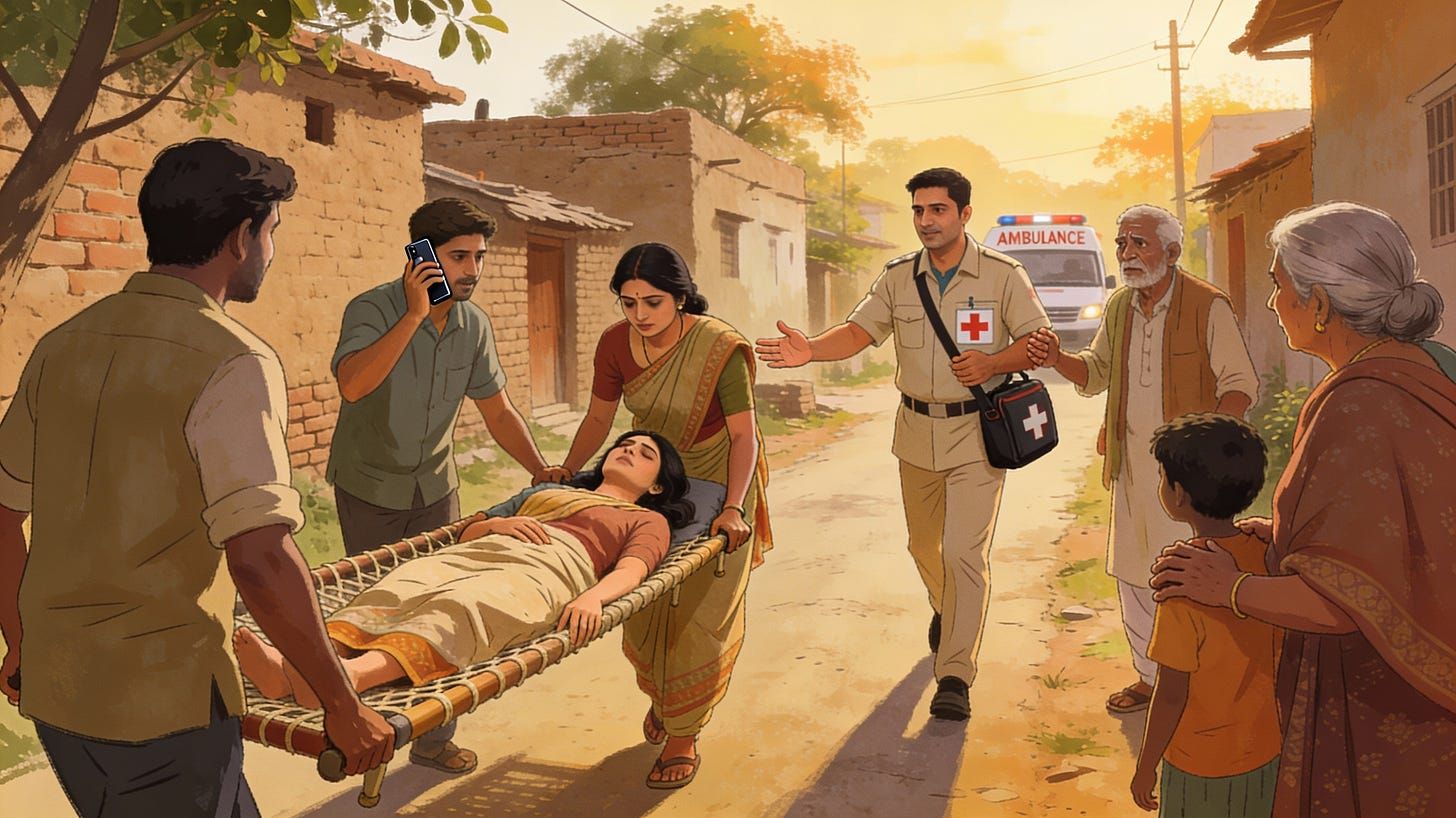
Where social ties were thicker, frontline health workers, such as ASHA workers, auxiliary nurse midwives and local volunteers, found greater acceptance. Here, legitimacy was not a technical term, it simply meant people believed that the worker had their welfare in mind. They were the most visible arm of the state during the pandemic.
The opposite held where communities were more fragmented. Suspicion surfaced more readily, and miscommunication or fear sometimes escalated. Media records show that thirteen out of sixteen attacks on frontline workers occurred in lower-homogeneity districts.
These incidents highlight that frontline effectiveness depends not only on training but on the social context in which workers operate.
The Limits of Caste Homogeneity
Social cohesion provided an early buffer, but it was not an enduring solution. As the lockdown extended and economic pressures deepened, mobility rose everywhere. Behavioural fatigue set in. Even cohesive districts saw transmission accelerate once livelihoods had to be protected.
For India’s rapidly urbanising landscape, new forms of networks emerged. Civic associations such as resident welfare bodies, school committees, workplace councils, women’s self-help groups and neighbourhood organisations proved essential in several cities during the pandemic. They organised supplies, communicated guidelines, assisted vulnerable families and supported frontline workers. These platforms provided trust and coordination in places where residents do not share identity, background or long-term familiarity.
Strengthening these civic channels is central to building resilient urban communities capable of responding collaboratively to future shocks.
Local Capacity in a Federal System
In India’s federal system, central guidelines set direction, but their effectiveness depends on how states and local bodies interpret and operationalise them. Panchayats, municipalities and ward offices are closest to the ground; they respond to neighbourhood-level dynamics that national maps cannot capture.
Strengthening these institutions through predictable funding, trained personnel, real-time data systems and stable community interfaces is essential for translating public health strategy into practical outcomes.
Preparing for Future Public Health Contingencies
India’s first wave highlighted a simple truth: public health responses move through social channels. Communities that slowed transmission did so not just because they had better facilities, but because they could activate networks of trust built over years. Communities that struggled were resource poor and often needed deeper administrative engagement – not for lack of will, but because their social fabric was more fragmented.
Preparing for future crises, from pandemics to extreme heat or floods, requires recognising that resilience rests on two pillars: strong health systems and strong social systems. Investing in inclusive forms of cohesion, supporting frontline workers, empowering local bodies and building civic platforms are all part of the same agenda.
Public health preparedness is ultimately community preparedness. India’s future resilience will depend on acting on that insight.