

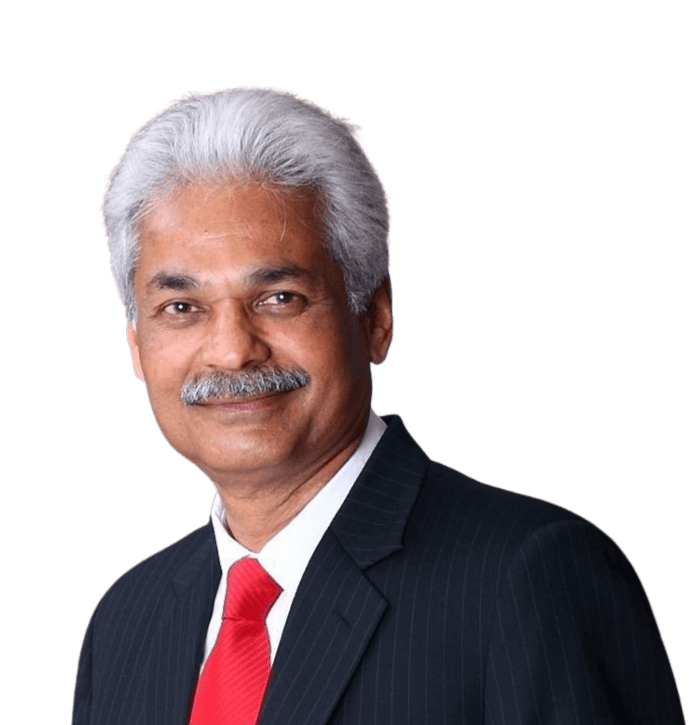
In this conversation with The Policy Edge team, Mr. Azad reflects on the evolving balance between secrecy and transparency, the pressures that shape police decision-making, the costs of arbitrary transfers, and the uneven landscape of policing reforms across India. His insights offer a rare vantage on how institutions navigate political pressures, public expectations, and constitutional accountability in a rapidly changing security environment.
Security forces are often described as both protectors of the state and providers of a public service. How do you see this dual responsibility, especially in a democracy?
In a democratic system, security’s legitimacy comes from citizens experiencing it as a service, not merely as an arm of state authority. That means not just preventing harm but building systems, infrastructure, and relationships that make people genuinely safer.
Where democracies face the most friction is in balancing state imperatives with citizens’ rights, particularly transparency and privacy. Security agencies operate in domains that inherently require confidentiality. At the same time, the public has a right to know how their institutions function, especially when powers like surveillance are involved. It’s a constant negotiation: share too little and you risk opacity and distrust; reveal too much and you compromise operational integrity.
The way to reconcile these tensions is through robust oversight. Judicial oversight for surveillance, parliamentary oversight for intelligence systems, and these are not ornamental features; they are structural safeguards that align the state power with democratic accountability. Our frameworks in India have improved, but many processes still remain personality-driven – good officers do the right thing; others don’t. That’s not enough. Democracies need systems that ensure responsibility irrespective of who occupies the chair.
How do security agencies manage the tension between public disclosure and the sensationalism that sometimes follows?
The tension is real. I have seen minor security incidents balloon into political theatre: sometimes unintentionally, sometimes deliberately. The media has a crucial role, but it also responds to incentives: competition, speed, and attention.
When I was DIG in Bhopal, I dealt directly with editors. Many were responsible, understood the risks, and worked with us to calibrate what should be in the public domain and what needed to be held back for investigations. But that’s the exception, not the rule. Officers are often left managing a three-way pressure chamber: public anxiety, media scrutiny, and political interest.
The policing landscape has also changed over twenty years. Officers rotate faster, communities expect quicker information, and historical trust levels vary by region. All this raises the stakes around disclosure: a single premature or sensational detail can rapidly escalate public anxiety or distort the narrative.
The responsible standard, in my view, comes down to two things: context and intent. If disclosure is driven by genuine public interest and backed by evidence, it strengthens policing. If it is driven by competitive sensationalism, it weakens the whole system.
There is a human side too – transfers in the Services are often defended as part of the job. Yet they produce enormous personal strain. How should the system navigate this contradiction?
Transfers are part of the service, which is beyond dispute. Even so, the family-level disruption they bring is considerable. Children’s education is affected, spouses adjust their routines, and officers must settle into a new administrative and political setting, sometimes with minimal notice.
That uncertainty shapes behaviour. Officers become risk-averse or overly deferential to political pressures because they fear arbitrary transfers. It affects morale and decision-making.
But there are moments when the system corrects itself. I remember a face-off with a minister who insisted on transferring a competent officer for reasons that were unrelated to performance. I was firm – this was a matter of integrity for the service. Eventually, the officer stayed. But that outcome depended entirely on individual will.
That experience also underscored how reliant the system still is on individual discretion. If transfers were governed by transparent criteria and a time-bound process, the service would retain mobility without weaponising instability. Right now, the contradiction is borne privately by officers while publicly being treated as an administrative routine.
Policing varies dramatically across India. Why do some states seem stuck while others evolve?
Policing is deeply shaped by local politics and institutional history. Take Bihar: a feudal political structure, thinly spread resources, and an environment where modern reforms struggle to take root. Compare that to Maharashtra or Andhra Pradesh, which instituted Commissionerate systems early, professionalised their investigative branches, and developed more stable leadership pipelines.
Then there is the problem of what I call “junk postings.” Brilliant officers end up in roles that fail to utilise their skills – sometimes deliberately, sometimes due to bureaucratic inertia. It is a colossal waste of public money and talent. Officers who should be leading complex investigations find themselves in an administrative backwater.
The real reform India needs is autonomy in investigations. Political influence must be filtered out. Leadership assignments should be based on expertise, not proximity to power. Policing is a technical job; treating it as a patronage system weakens the state’s capacity.
Media pressure complicates this further. An investigation is a careful, often tedious scientific process. But public and political impatience pushes for instant outcomes. I have experienced this firsthand, whether in Bhopal years ago or more recently during the Sushant Singh Rajput case. The pressure to “do something” immediately can distort evidence collection, shape premature conclusions, and at times derail justice.
A good officer learns to hold the line: prepare thoroughly, gather evidence, and act only when the foundation is solid. But that stance is lonely when the entire ecosystem demands haste
You have also worked in high-stakes geopolitical contexts, like the cricket diplomacy security mission to Pakistan in 2003-04. What did that experience teach you about decision-making under uncertainty – when politics, sentiments and security coincided?
That mission was unique. In 2003, after the Parliament attack, the idea of sending an Indian cricket team to Pakistan was a brave and commendable attempt by our political leadership to give peace another chance. I was asked to lead a security assessment across Lahore, Rawalpindi, Karachi, and Peshawar. Frankly, I was hesitant – this was not routine policing, but geopolitics layered onto public emotion.
But once on the ground, the interactions were extraordinary. Pakistani police officials treated us with deep professional respect; they understood that we were assessing risk, not engaging in politics. Yet the threats were real. Karachi and Peshawar, in particular, had serious risks that could not be discounted.
After thorough evaluation, I recommended that India play only a one-day match in these two locations instead of the full test match initially proposed. It was a balanced decision: honour the spirit of diplomacy but minimise exposure. And the government accepted it.
It was a difficult call; balancing politics, public sentiment, and safety is never straightforward. But decisions in security are rarely binary. You operate in shades of risk, never in certainties. The task is to choose the path that maximises safety without shutting the door on dialogue. In Pakistan, we found cooperation, professionalism, and goodwill, but also real threats. The responsible decision was somewhere in the middle.
The same principle runs across domestic policing and international security. Whether dealing with a media trial in Mumbai or a security corridor in Karachi, you are always managing tensions: between speed and accuracy, secrecy and transparency, political expectations and professional judgement. Security work is essentially the art of navigating these contradictions without letting any single pressure distort the public interest.